Devising Through Commedia

Commedia dell’Arte offers one of the clearest early models for what we now call devised theatre, and its methodology underpins our performance-making at Learning Through Theatre.
Working without playwrights or directors, commedia consisted of a group of multi-skilled actor-creators using ensemble devising techniques. Productions were devised collaboratively using familiar stock characters, an outline structure and extensive improvisation of action and dialogue. Key sequences were rehearsed, and the ensemble collectively authored original work. While a capocomico led the troupe, their role was closer to that of a producer than a director, facilitating rather than controlling the creative process.
Starting Points
When Learning Through Theatre works as a performance ensemble, our starting point is a simple seed of an idea – most often a physical, comic gag (a ‘lazzo’).
Our first show, Trouble Inn Paradise, began from a desire to master a sleight-of-hand gag in which three waiters appear to toss a single tray of food across the stage. From this physical idea, the setting naturally emerged: a restaurant called the ‘Inn Paradise’.
Our second show, The Breath of Love, began with the question of how love might be bottled and sold. This led to the creation of the “Lazzo of Trying to Bottle Love,” which became the engine for the piece.
Playing in the Space
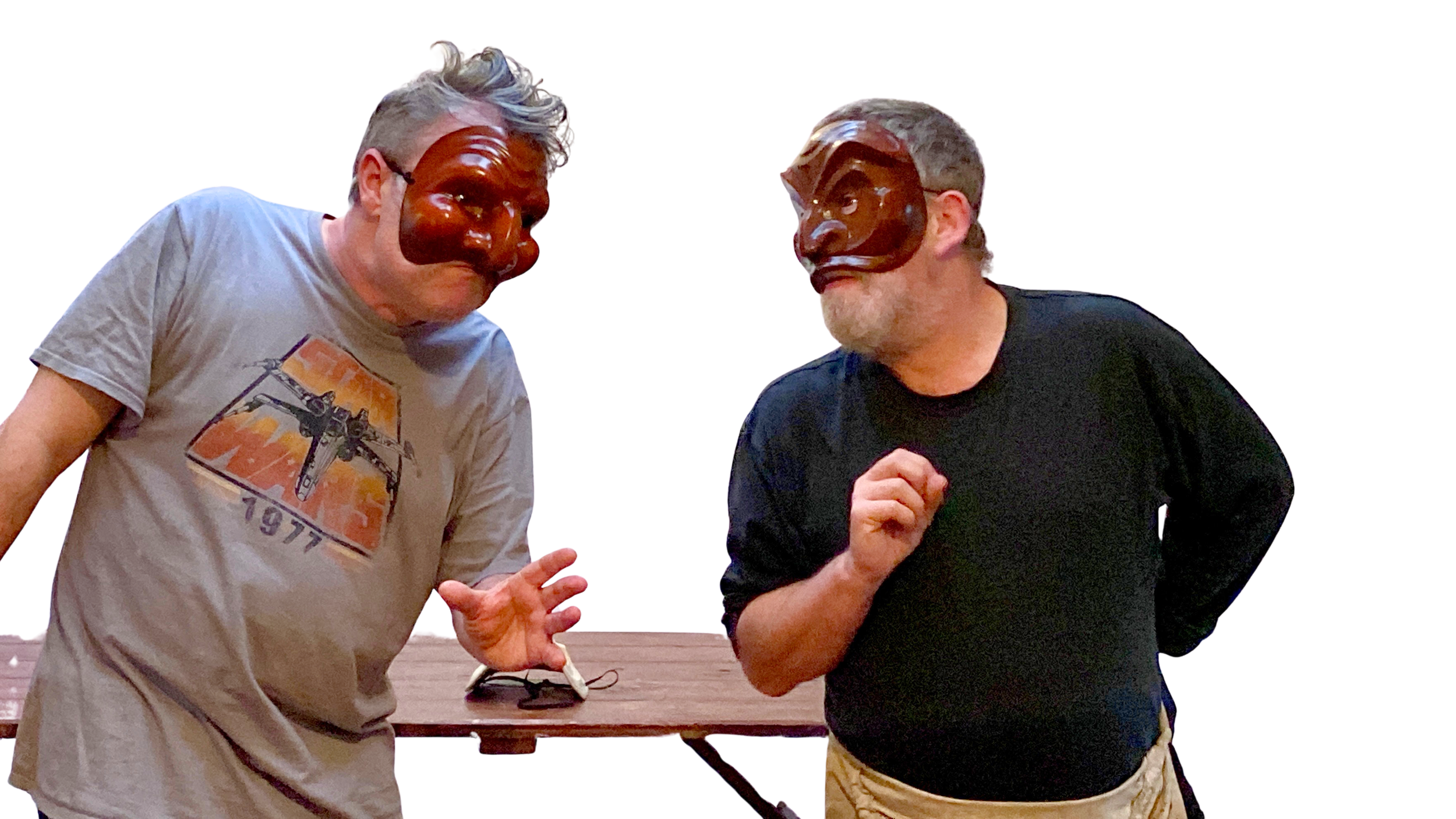
From these initial ideas, we begin to play in the rehearsal space, exploring how each lazzo works and which characters best serve it. The emphasis at this stage is on childlike play through improvisation games, designed to generate adrenaline, creativity and further ideas.
All the character masks are laid out, and we freely experiment, asking:
Which masks do we enjoy playing?
Which masks feel right for the gag?
Which masks are funniest for this moment?
From this open play, we identify the main characters for the piece and often generate additional lazzi, alongside a clearer sense of the narrative direction.
Narrative Arc: Creating a Canovaccio
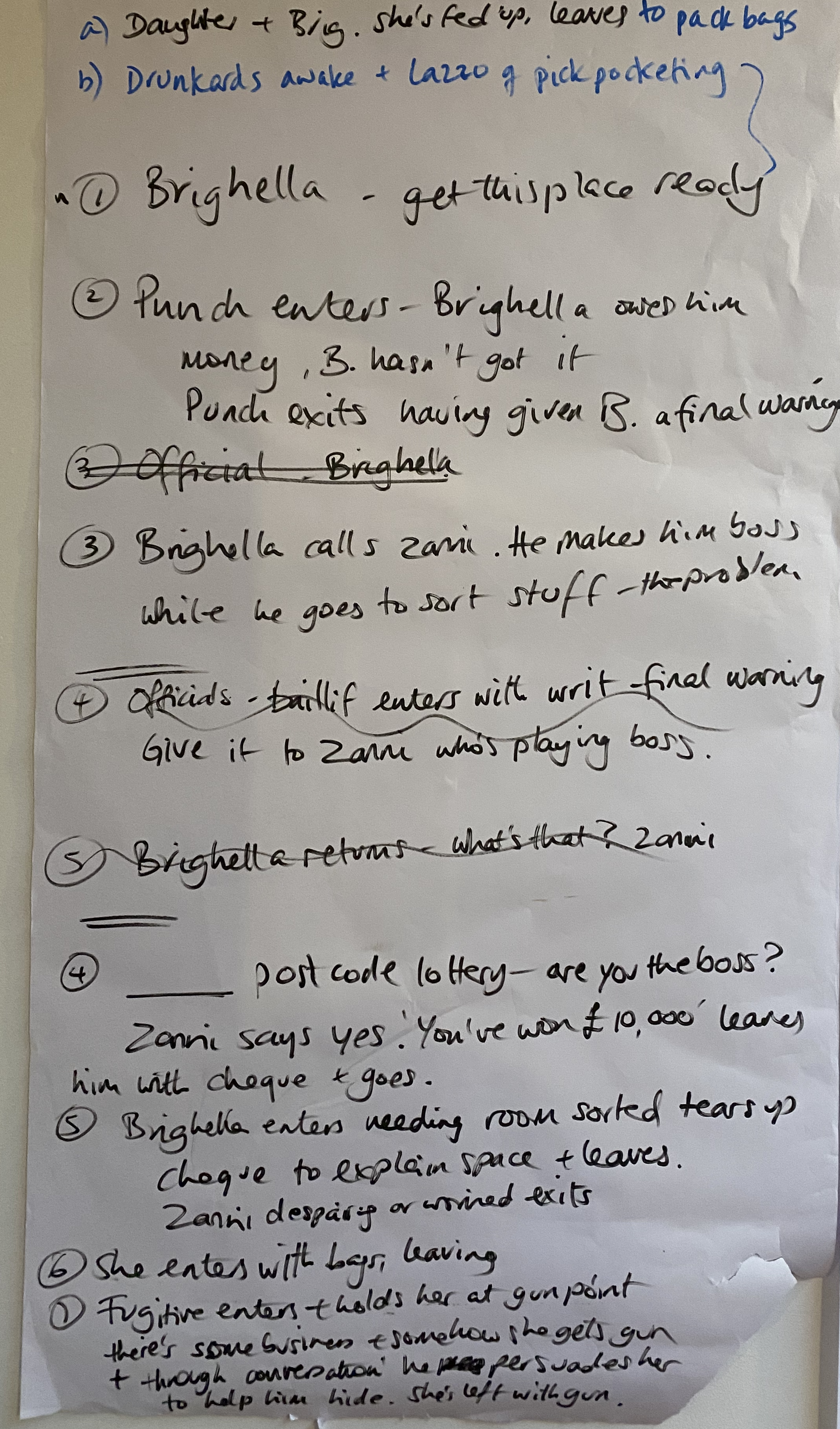
We then dedicate a day to shaping a possible frame for the action, known in Commedia as a canovaccio. Literally meaning ‘canvas’, this was traditionally an outline of scenes, entrances and exits, and key action points. Actors knew the order of events and what needed to happen, but not how, leaving space for invention.
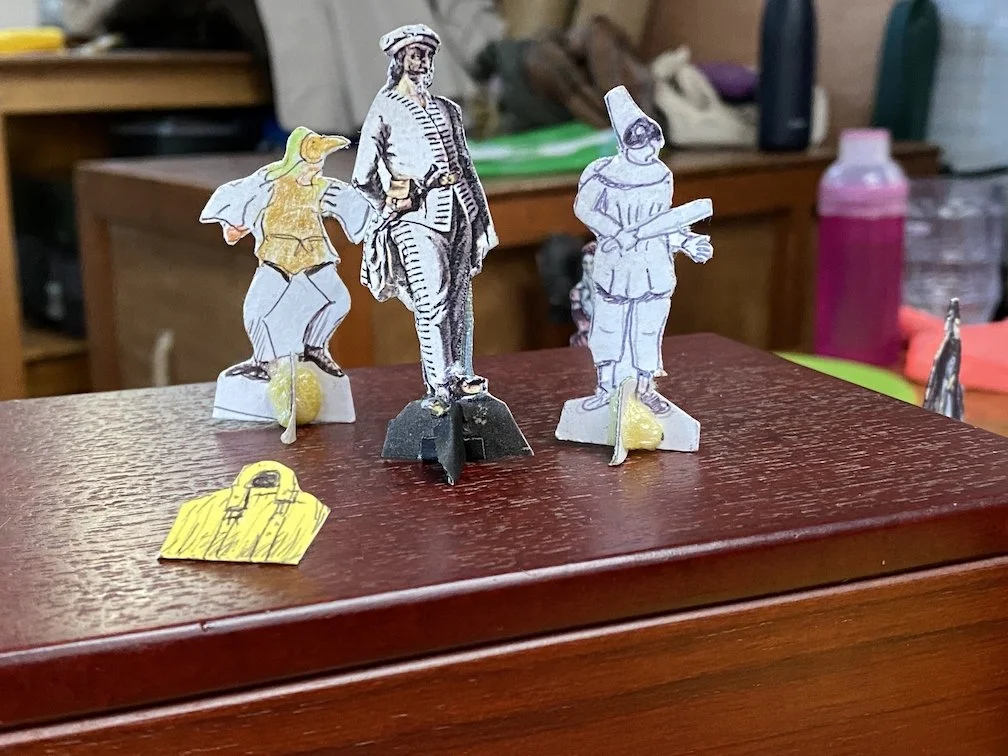
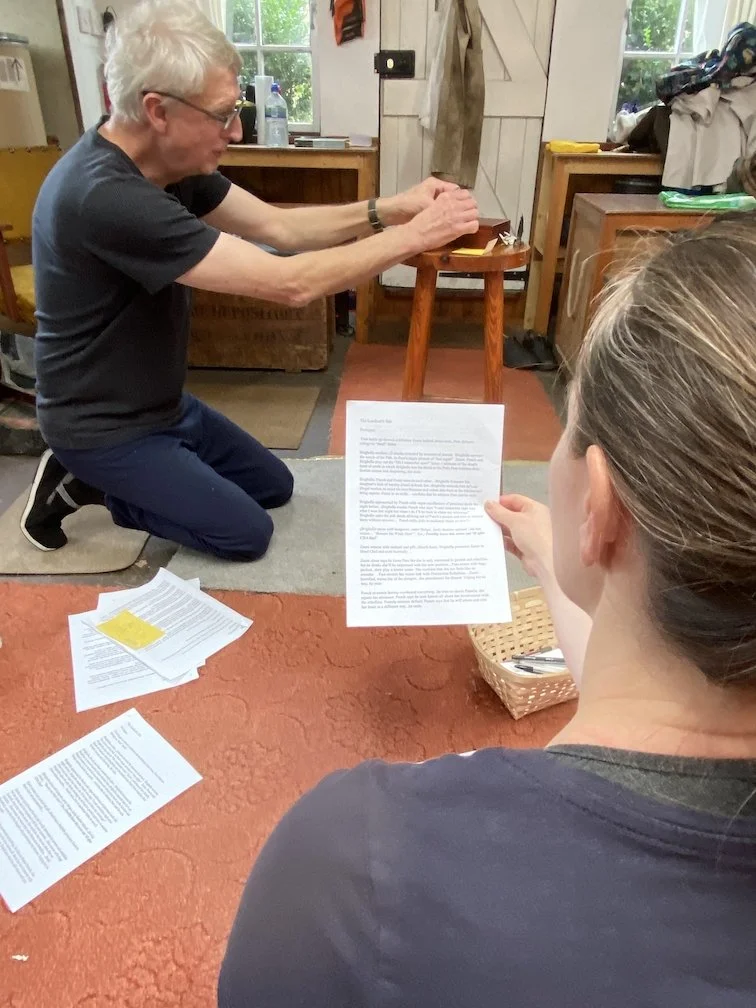
Using a pen and paper, we map the narrative arc and plot key action points, connecting them to characters and lazzi. To visualise the spatial relationships, we use a rudimentary model box with miniature figures, moved like chess pieces, considering which character pairings will generate conflict and momentum. It was John who introduced this useful tool – one that he found invaluable when working in the 1980’s with renowned British troupe, The Unfortunati. As we usually work with a small troupe of three or four performers (rather than the traditional ten to twelve), this really helps us work out who can be on stage when and enables us to factor in practical considerations, like costume changes.
Walking the Arc
With the canovaccio in place, we return to the rehearsal room and physically walk the narrative. Playing at very low energy, we map where characters enter and exit, how scenes transition and why actions occur. This process quickly exposes logistical or narrative problems that can be addressed early.
Improvising Scenes
Once the framework is clear, we begin improvising scenes. Physical storytelling comes first, drawing on the established movement vocabularies and energies of the characters. Character is the engine of the narrative: hierarchy, behaviour, needs and relationships naturally shape how scenes unfold.
We aim to keep scenes under two minutes, with no more than two characters on stage at once for most of the play. Actors not involved in a scene sit out front as an audience, maintaining awareness of how the work is landing.
Thinking Cap
To keep momentum and avoid overworking individual scenes, we use a ‘Thinking Cap’ filled with post-it-sized paper. Observers jot down ideas, edits or questions while watching. At the end of the day, we spend time reviewing the notes together, allowing reflection without interrupting creative flow.
Choreography
As scenes develop, highly physical moments and lazzi are choreographed to ensure they are repeatable, safe and slick. Dances, music and songs are devised alongside the action and rehearsed regularly.
We frequently video rehearsals as a memory aid and reflection tool. These are either watched together or shared via a cloud drive, allowing performers to make notes independently and keeping rehearsal time focused on practical work rather than lengthy discussion.
Feeling the Rhythms
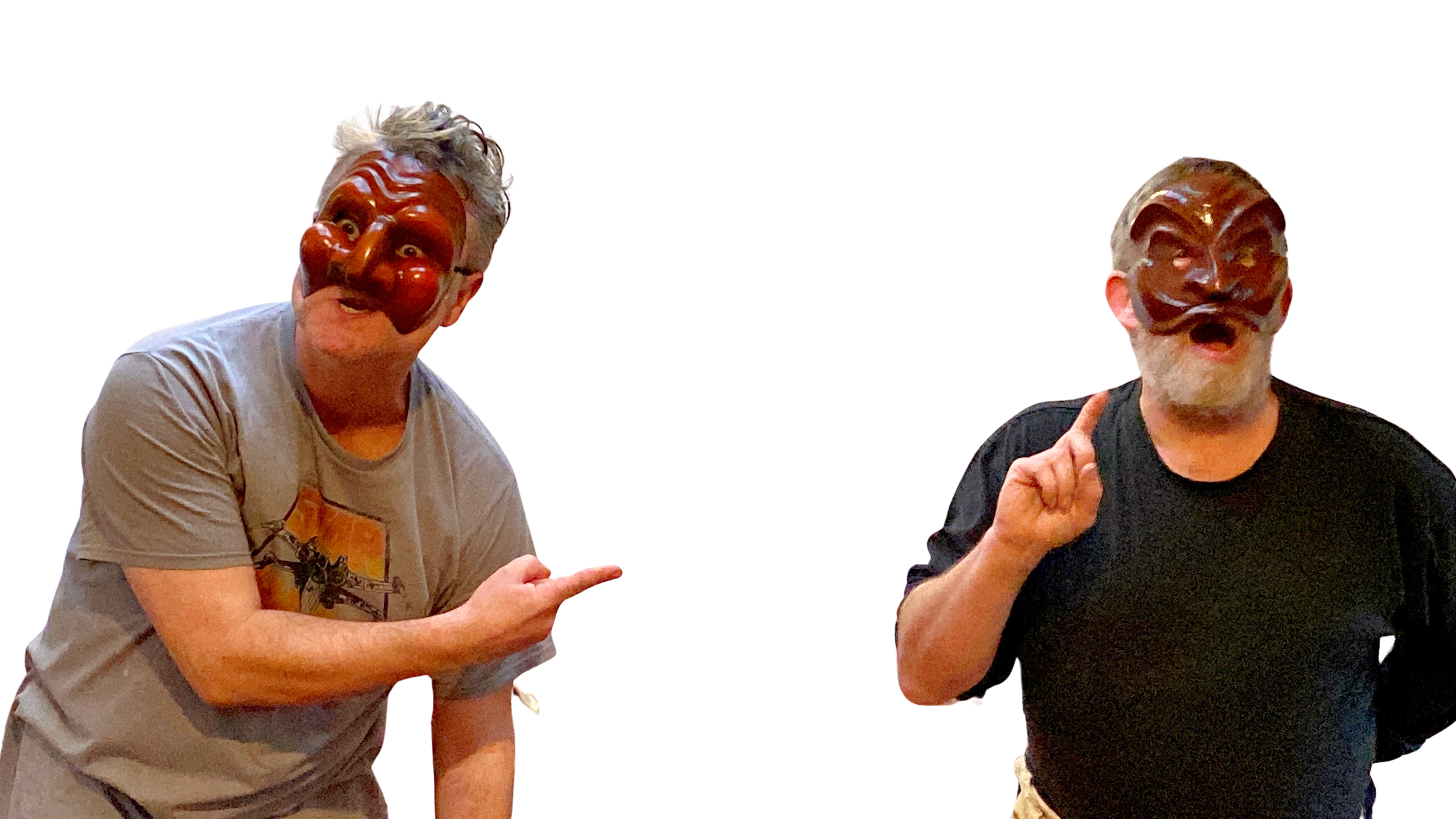
As scenes settle, some dialogue begins to fix itself as cues for action, while other lines remain improvised. A key risk of improvised dialogue is losing rhythm and allowing scenes to stretch.
Commedia relies on gestural language – meaning is carried through the body, breath and spatial relationships – so dialogue must remain minimal. To refine this, we often rehearse scenes using grammelot (gibberish language), focusing on energy, beats and proxemics. Only the essential lines for clarity or plot are reintroduced.
This approach also applies to monologues, ensuring they remain dynamic and rhythmically alive.
Stock Speeches
Where monologues are required, performers develop them through rehearsal before writing them in a notebook (an actor’s zibaldoni) and marking where they will occur in the canovaccio. These moments serve both narrative and practical functions, allowing insight into a character’s inner world while enabling costume changes.
Traditional Commedia examples include Pantalone’s tirata of grievances, Capitano’s boastful bravura, the Lovers’ concetti, or the Doctor’s verbose sproloquio extolling his own intellect.
Playing an Audience
We regularly invite friends into rehearsals to act as an audience and offer an outside eye. Without an audience, it is impossible to judge whether lazzi are landing or whether additional narrative clarity is needed.
Final Script
Because rhythm is so central to the work, dialogue gradually becomes more fixed, particularly where fast repartee is required. By the time we perform, the piece is largely scripted, with each actor holding a clear and reliable version of the canovaccio and a detailed version of their parts – shaped through play, precision and collective authorship.
Try It Yourself
Two-Day Commedia & Devising Skills workshop
18-19 July 2026, University of Gloucestershire
Early Bird price £95 - book by 30 June 2026!
Thank you to the amazing team at WeTeachDrama for inspiring me to write this! Do check out the invaluable range of resources We Teach Drama have on offer.