
Lazzi
The Secret "Toolbox" of the Actor-Creator
lazzo /ˈlät-zō/ noun (pl. lazzi /lat-zee/)
(Definition: A bit of improvised physical comic business in the commedia dell'arte)
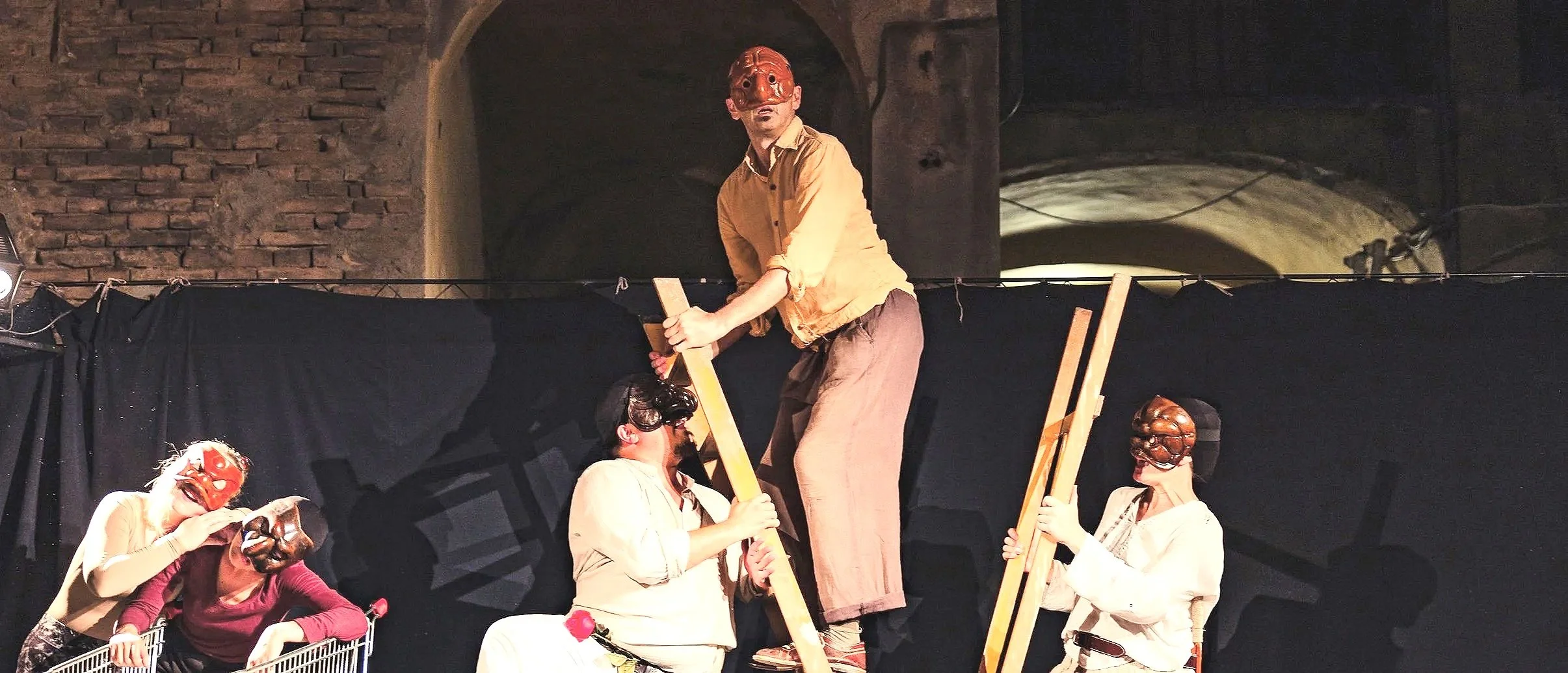
In Commedia dell’Arte, the script doesn’t begin on a page; it begins in the rehearsal room and lives in the bodies and shared memory of the ensemble. Often talked of as an improvised form, Commedia is often mistakenly talked of as being entirely made up on the spot. There is a degree of flexibility in the dialogue for sure, and the script will always draw in references relatable to the audience played to that day, but much of a Commedia production is well rehearsed and ‘locked down’. A key component of this ‘organic, living theatre’ are the lazzi.
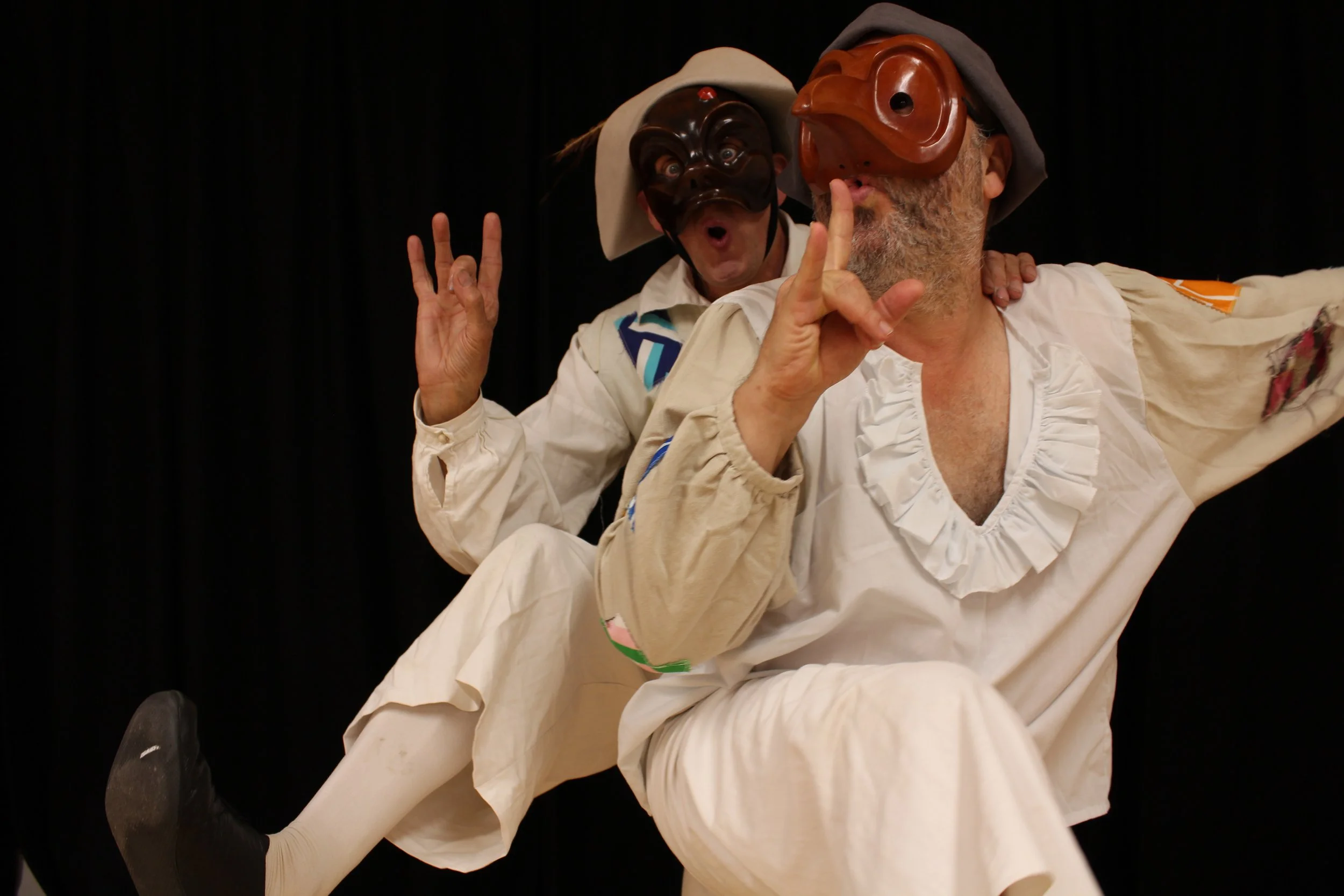
The word translates literally to ‘jokes’ and in Commedia these lazzi are rehearsed, repeatable units of comic business – physical and/or verbal gags, pranks or acrobatic feats – that an actor can add into a scene to heighten the comedy, change the rhythm, or save a lagging plot. Lazzi generally do not move the plot forward though; actors will usually have a stock of lazzi scribbled in their zibaldoni (pocket notebook) that can be thrown into any narrative. As well as providing comic relief, lazzi are a chance for the actor to show off their physical virtuosity, their technical prowess or verbal wit. In the hay day of Commedia dell’Arte (16th-17th Century) certain actors became known for their signature lazzi and audiences would applaud the moment when their unique style and comic skills took centre stage. Carlo Goldoni famously decided to write a full script for his play ‘The Servant of Two Masters’ in order to tame the actor’s ego and commit the ‘allowed’ lazzi to the page leaving little room for performance braggadocio!
Frequently Asked Questions
Which characters perform Lazzi?
Most frequently, it is Zanni (the servants) who perform lazzi but any character could perform them – or become embroiled in them. The only characters who are unlikely to be the instigators of physical lazzi are the Lovers, as these characters are played ‘straight’ and not for comedy, however, that does not prevent them from becoming caught in the middle of a physical lazzo and they will often be involved in verbal lazzi.
Can you speak in Lazzi?
Yes! While many lazzi are purely physical, Commedia characters are rarely silent. Whether through rapid-fire dialogue or rhythmic monologues, sound is an essential tool for the actor-creator. There are some purely verbal lazzi, though these are less commonly talked about.
Using Grammelot as a Bridge
When devising a new lazzo, we recommend starting with grammelot (gibberish that mimics the sounds of a real language). This allows you to:
Map the ‘shape’ and rhythm of the sequence without getting bogged down in script.
Focus on the physical storytelling and the emotional ‘drive’ of the character.
Use audible breath and exaggerated gestures to convey meaning.
From Sound to Script
As the lazzo takes shape, you can begin to replace the nonsense with ‘essential’ words. Use dialogue selectively – only keep the lines that clarify your intention or heighten the comedy.
Pro-Tip: If a scene still relies heavily on grammelot after several rehearsals, it’s a sign that specific dialogue is needed to drive the plot. Conversely, if the words are slowing you down, strip them back and let the body do the talking.
Are Lazzi unique to Commedia?
No. Whilst lazzi did find their name from Commedia troupes, Commedia is certainly not their only domain. They are a blueprint for physical storytelling and we see them all the time in good comedies - those slapstick gags we all love to laugh at and are universally popular.
Why are Lazzi useful to an actor who does not want to be a Commedia performer?
By mastering these lazzi performers learn:
The Rule of Three: Understanding how to build a gag to ‘milk’ for laughs.
Precision and Safety: How to execute high-energy slapstick with total control.
Ensemble complicité: Working closely on a rehearsed routine to synchronise and support each other.
Audience Connection: Learning how to truly engage the audience and play with them, rather than just at them.
Whether it’s a Zanni desperately trying to catch a fly or a Captain’s knees knocking in terror, these bits of comic business are the universal language of comedy. Below is our curated library of lazzi, adapted specifically for the modern rehearsal room and educational workshop. We will keep adding to these so do check back regularly – and if you have some you would like us to add, drop us an email!
Lazzi Library
Physical & Slapstick Lazzi
Lazzo of the Fly: A zanni, driven by hunger, stalks and eventually eats a ‘gourmet’ fly. The slapstick is used as a fly swatter and the zanni unwittingly causes himself slapstick ‘injuries’ in the process of trying to catch the buzzing annoyance.
Lazzo of the Tooth Extractor: A terrifyingly clumsy mock-surgery using giant, ridiculous tools like blacksmith’s pincers. This originates from the famous Scala scenario ‘The Dentist’ where Arlecchino takes a disguise as a dentist and convinces Pantalone his teeth need extracting.
Lazzo of the Unspilled Wine: A zanni performs a full somersault or roll while holding a glass – not a single drop is lost.
Lazzo of the Innocent Bystander: A second lover is attempting to fight with a love rival (both of whom are very serious about their intent) but they 'accidentally' land every blow on the zanni trying to break up the fight.
Lazzo of the Straw: A zanni siphons a master’s drink through a long straw from behind their back.
Lazzo of the Invisible Obstacle: Arlecchino mimes hitting a solid, invisible wall. They struggle to find a way around while others walk through the space easily.
Lazzo of the Sticky Letter: A secret letter won't leave the zanni’s hand. Every flick of the wrist just moves it to a new, more awkward part of the body.
Lazzo of the Chair: As a high-status character prepares to sit, the zanni pulls the chair back at the very last second.
Lazzo of the Heavy Sack: Two zanni heave a bag supposedly filled with gold. When it rips, it contains only a single feather.
Lazzo of the Sneeze: An agonising, thirty-second physical build-up to a sneeze, that ends in either a tiny 'pip' or a world-shaking explosion.
Lazzo of the Mirror: Two characters perfectly synchronise every movement as if one is the other’s reflection. This was used by The Marx Brothers to great effect in Duck Soup between Groucho and Harpo.
Lazzo of the Statue: To escape capture, a zanni mimes a garden statue. They must remain frozen while a pursuer 'tests' them by hanging a heavy coat on their arm.
Lazzo of the Shield: Capitano grabs a zanni and uses him as a physical shield, rotating him like a revolving door to avoid danger.
Lazzo of the Puppet Master: A zanni moves the limbs of a 'fainted' Lover to make them appear alive during a conversation.
Lazzo of the Ghost: A character puts a sheet over their head to scare others but gets so lost they end up scaring themselves. Much opportunity here for double-takes, chases and reversals and the ‘ghost’ could be a zanni or a master.
Lazzo of the Tasting: A zanni “checks for poison” by taking sip after sip until the master’s entire bowl is empty.
Lazzo of the Chase (Stationary): Two or more characters run 'on the spot' with exaggerated effort, using the audience as the moving scenery by moving their head to watch things go past. This could be zanni or zanni with a master.
Verbal & Mental Lazzi
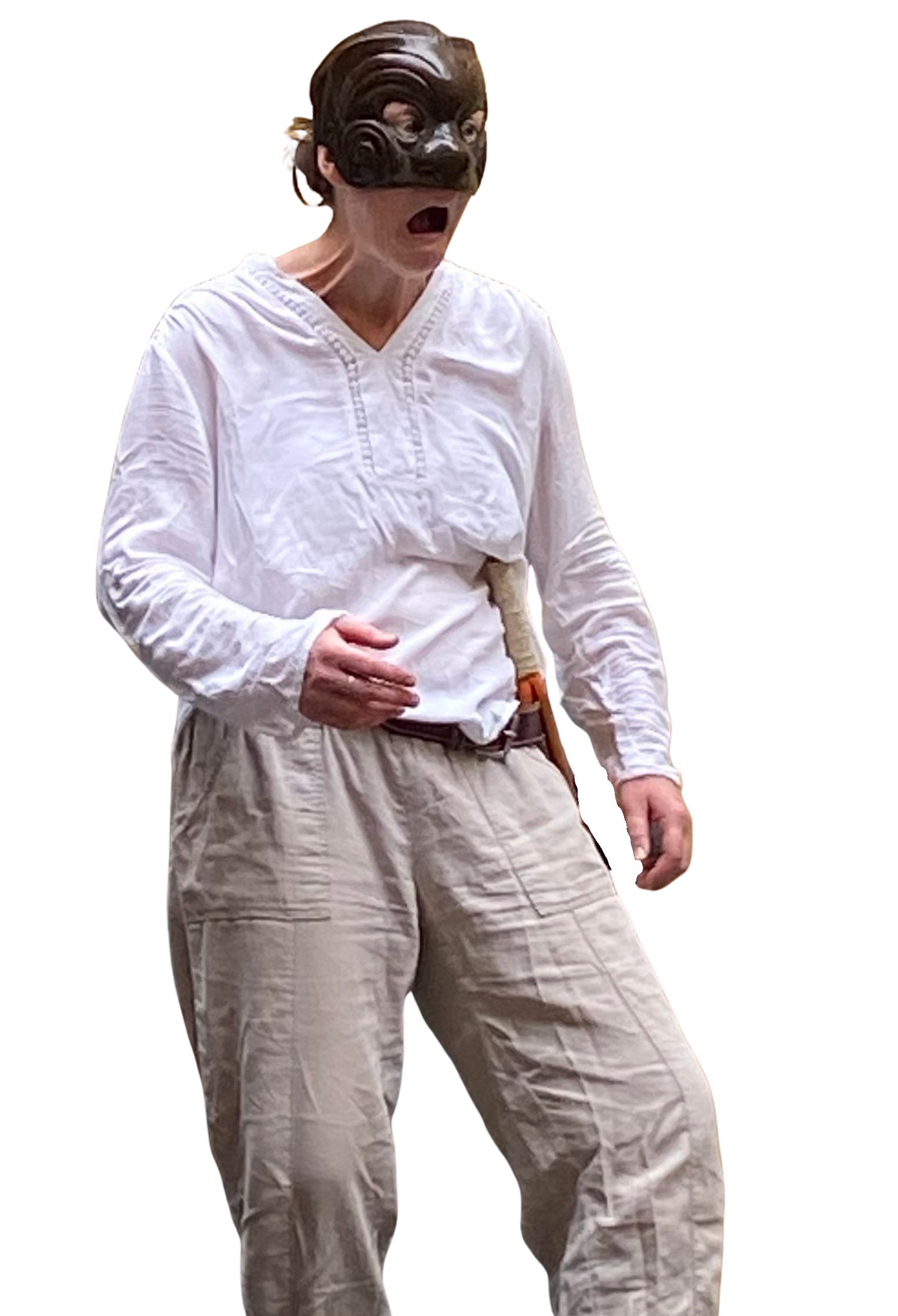
Lazzo of the Foreigner: A character (Dottore, Capitano or a zanni) speaks entirely in 'Grammelot' (gibberish) and must convey complex instructions through tone and gesture alone.
Lazzo of Echo: A zanni shouts secrets into a well. A hidden zanni repeats the last few words but changes the meaning to mock them.
Lazzo of the List: A zanni recites a 'to-do' list that gradually morphs into nonsense (e.g., 'Buy some bread' becomes 'Drop him dead').
Lazzo of the Deaf Master: Pantalone refuses to admit he can't hear, turning serious plot points into ridiculous, rhyming misunderstandings.
Lazzo of the 'No, YOU!': Two characters get into a circular argument, repeating the same insult but flipping the pronoun – “You are a fool! / No you are a fool!” This escalates in speed and volume until they are both shouting the same thing at the same time, eventually forgetting what they were fighting about.
Lazzo of Spite on Spite: Two Lovers or Pantalone and Dottore hurl ‘abusive’ comments at each other in a rhythmic back-forth pattern with ‘abuses’ becoming increasingly absurd. For Lovers, the focus is love-hate as they attempt to out-do each other with the extent of their passion. The pace and ‘tennis action’ of this are critical to success.
Lazzo of the Rhyming Insult: A character delivers a 'Tirate' – a long, rhythmic rant of increasingly ridiculous adjectives without taking a breath. Often used by Pantalone or Il Capitano. "You bumbling, stumbling, crumb-eating, thumb-sucking, noodle-headed nuisance!" The actor must keep their breath control going to reach the end of the list without pausing, building the energy until they are red in the face.
Lazzo of the Translation: A character (usually of high status) speaks at length in passionate grammelot, which The Doctor translates as a single, mundane sentence like “He is hungry”. The contrast between the epic speech and the tiny translation reveals the Doctor's incompetence.
Lazzo of the Misinterpreted Word: A servant hears sophisticated instructions as something related to food (e.g., “Ambassador” becomes “Ham-pasta”). This creates a "Comedy of Errors" where the servant spends the next ten minutes looking for lunch instead of a diplomat.
Lazzo of the Never-Ending Story: The Doctor starts a story but goes off on endless 'tangents' about every noun they mention until everyone else falls asleep. "I was walking to the market – speaking of markets, my uncle once bought a pig – now, pigs are fascinating creatures, much like the ancient Greeks – who, as we know, invented democracy..."
Rehearsal Tip for Verbal Lazzi:
The "Verbal Tennis" Exercise
To practice these, have two performers stand face-to-face. Give them one ‘Verbal Lazzo’ and a ball. They can only speak when they catch the ball. This forces them to focus on the cue-response rhythm that makes Commedia dialogue feel like a musical score.